

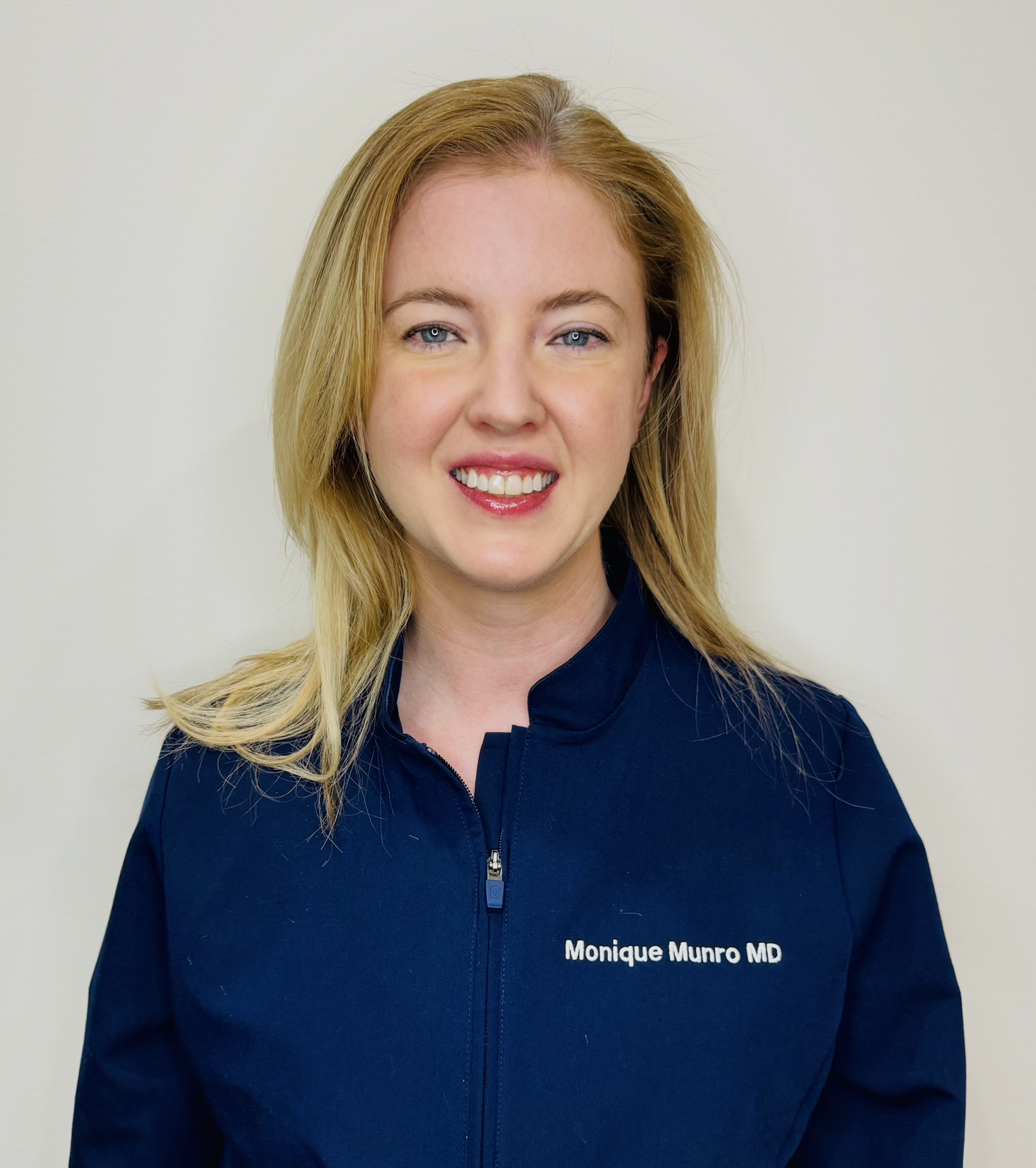
Looking back on your journey, what initially drew you towards retina and inflammatory eye disease, and what made you pursue such a broad, multidisciplinary path?
I always liked both subspecialties, and there's a tremendous amount of overlap between retina and uveitis. As a retina specialist, you inevitably encounter posterior uveitis, and those patients can be incredibly sick: not just in their eyes, but systemically, sometimes with life-threatening conditions. I felt it was important to pursue extra training to provide the best care for those patients.
What drew me to this combination in particular is the interplay with internal medicine. Working with uveitis patients means co-managing with rheumatologists, pulmonologists, nephrologists and more; it's a deeply multidisciplinary practice. Ophthalmologists are medical doctors, and with these subspecialties, you get to stay connected to that broader medical identity in a way that I find very rewarding.
Your practice also involves pediatric retinal disease, which comes with its own patient challenges. How have these different aspects of your work shaped the way you approach patient care?
Across Canada, whether you train in pediatrics or not, you will see pediatric patients on call as a retina specialist. As it happened, my fellowship at the Illinois Eye and Ear Infirmary was very pediatric-focused. Although I initially planned solely a uveitis focus, my fellowship provided extensive exposure, and I quickly realized how rewarding I found it.
What makes it particularly meaningful is the continuity. When you care for both children and adults surgically, you have the opportunity to follow someone throughout their entire life. I currently see a lot of pediatric inherited retinal disease at the Alberta Children's Hospital in Calgary, and as those patients grow, they transition into my adult practice rather than having to switch to a new specialist. That longitudinal relationship is one of the most special aspects of what I do.
Have there been particular patient populations or experiences that made you more aware of questions surrounding accessibility, advocacy, or equity in eye care?
The inherited retinal disease population has me thinking deeply about this. These patients often live their entire lives with incurable low vision, but at face value, people can't see or identify that they have difficulty with their vision. I can only imagine how challenging that invisibility is to navigate a world that doesn't recognize your disability because it isn't outwardly apparent.
The support systems that exist do noble work, but they're underserved. They have more patients than they can keep up with and wait times for services can be lengthy. I'm encouraged by the technology that's emerging to help these patients maintain more independence than in the past, but I wish I had more time to help them explore those aids and options individually. This is a group that needs strong advocacy, including improved access to low vision rehabilitation, assistive technologies, genetic counselling, and timely support services.
You've spoken about following some of your patients from childhood into adulthood. Can you speak to the importance of that longitudinal relationship and what it means to your practice?
That's why we go into medicine. Some specialties afford you that longevity with your patients, and some don't. Ophthalmology is unique in that we often follow patients for a very long time: glaucoma, corneal conditions, diabetic retinopathy, macular disease. And if you do pediatrics alongside adult care, that relationship can span an entire lifetime.
It's a privilege, and I think the key is keeping things patient-centric. If your goals stay centered on the patient, the right answers tend to come to you. That's something I try never to lose sight of.
As the first female surgical retina specialist in Calgary, did representation or mentorship play a role in your own journey? And how do you think it influences younger trainees today?
I was very lucky. I trained in Calgary, and while there wasn't a female surgical retina specialist there at the time, my teachers (who were all male) were incredibly encouraging. I never felt like I couldn't pursue this path because of my gender. Interestingly, the occasional discouraging comment came from people outside the retina field itself, not from within it, as retina can be service heavy.
That experience shaped how I approach mentorship now. What I took from it is the importance of seeing someone's interests and capabilities first, and setting aside any assumptions you might have about their personal life or future plans. You never know if someone wants to have children, can't have children, what their family dynamic looks like, or what caregiving responsibilities they carry. We make a lot of assumptions about people based on gender, race, or age, but we don't actually know what their home life is like — and those assumptions shouldn't determine what someone is encouraged or discouraged from pursuing — you need to know their interests, capabilities and their specific work and life goals and counsel once you know these things.
This is something I'm thinking about a lot as I take on the role of program director this year. Helping residents reach their goals means getting to know the whole person — not just their academic interests, but what they want from their home life, their leadership aspirations, their research ambitions. If someone wants a career heavy in research, a particular fellowship at a particular institution might serve them best. If someone wants a very involved home life, a different centre. fellowship or subspecialty might help balance those priorities. And all of these things shift with time, so it's an ongoing conversation.
As someone who had their first child early in practice, do you have any thoughts for trainees navigating family planning alongside a demanding career?
It takes a village to raise a child, and that applies in residency and practice just as much as anywhere else. When you take time away, it does mean peers picking up extra call, seeing your patients, and that can create tension or fatigue. So I think having strong peer relationships is really important. Strong collegial relationships make these transitions much easier. Residency is a team sport, and supporting one another through major life events ultimately benefits everyone.
Beyond that, the landscape has changed for the better. Associations across Canada now have more supportive and protective measures around parental leave duration, call scheduling, and guidelines that take a lot of the pressure off individual negotiation. Residency is actually a unique time in that sense as patient care is shared within the supervising team, which provides an additional level of support when residents need to take parental leave. There's no perfect time to have children, but I wouldn't use residency or medical school as a deciding factor for or against it. It's a more protected time than people might expect.
What advice would you give to medical students who are interested in ophthalmology but have limited exposure during their training?
Keep reading and come prepared. With competitive specialties, having a foundation of knowledge before a rotation makes a real difference. Beyond that, take every opportunity your university offers, don't leave anything on the table.
I'd especially encourage getting involved in research projects. Research gives you face time outside the clinical setting, and it allows you to form closer academic relationships with residents and attendings. The reality is that in a busy clinic, there can be very little interaction with a student — we're focused on the patients, and teaching moments are limited. But on a research project, you're working together more closely, and that's where stronger mentoring relationships tend to develop.
Coming to conferences is also valuable, and getting involved with organizations like COSIG. These are the spaces where you can build connections and demonstrate genuine interest in the field. Be curious, ask thoughtful questions, and be someone people enjoy teaching. Volunteering time is also great. Help out at your local research day or other tasks where extra hands to coordinate make a difference.
If you could instantly change one thing in ophthalmology, whether it's accessibility, education, culture, or patient care, what would it be?
Training more ophthalmologists and creating positions for them. I think we're getting overburdened, and the need is growing. But it's not just about training — it's about job creation. We need to train ophthalmologists and ensure there are positions for them, both in major centres and in communities across the country that are underserved. The demand is there, and the workforce needs to keep pace. Canada has exceptional trainees; our challenge isn't attracting talented people—it's building a system that allows them to practice where patients need them most. We need to work with our local departments, universities and governments.
Dr. Munro's path, from Calgary to Chicago and back and across retina, uveitis, and pediatrics is a reminder that the most impactful careers in ophthalmology aren't built by narrowing your focus, but by following your curiosity wherever it leads. And as she puts it, if you keep things patient-centric, the answers will always come to you.


